Olympic Barbells: Ultimate Buyer's Guide

A barbell and bumper plates allow you to train nearly every major muscle group in the human body, load movement patterns progressively, and build lifelong strength. You will never outgrow a quality barbell—if selected carefully and properly maintained, it will be the centerpiece of your training setup for life.

Whether you are equipping a commercial facility, setting up a home gym, or looking to upgrade your personal lifting gear, understanding a barbell inside and out ensures you choose the exact tool for your training demands.

1

The Basics

Shaft Diameter

Shaft thickness directly dictates grip mechanics. Standard Olympic weightlifting bars feature a 28mm shaft to facilitate a comfortable hook grip during rapid movements. Powerlifting bars increase this to 29mm or 32mm to ensure maximum rigidity under heavy squat and bench loads. Women's Olympic bars drop to 25mm for smaller hands, while Fat/Axle bars measure up to 50mm to deliberately challenge forearm and grip strength.

Knurling

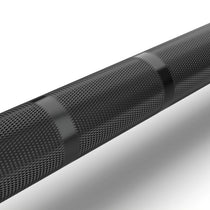
Knurling provides the friction necessary to keep the steel secure in your hands or across your back. Casual lifters generally prefer moderate knurling that grips without tearing skin, whereas competitive powerlifters rely on aggressive, deep cross-hatching. Olympic and CrossFit bars often minimize or omit center knurling to avoid scraping the neck during front rack movements, whereas powerlifting bars retain sharp center knurling for back squat stability. Standard dual knurl marks provide visual indicators for consistent hand placement.

Sleeves, Diameter, and Weight

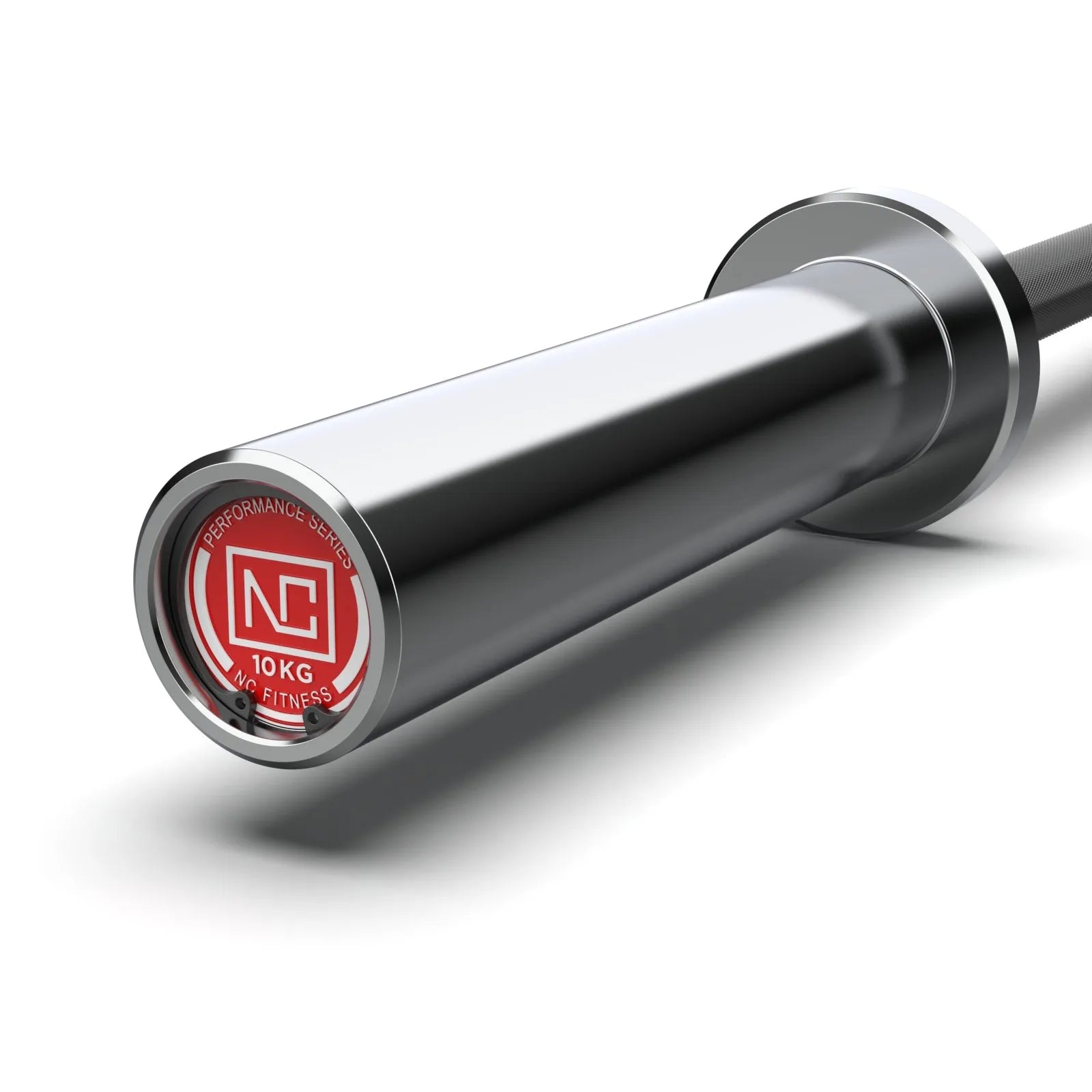
Rotating sleeves are essential for dynamic movements like cleans and snatches, as they spin independently of the shaft to reduce wrist and elbow torque. Standard Olympic specs require a 50mm sleeve diameter worldwide to match official bumper plates. Standard bar options include the classic 20kg (45 lb) men's bar at 2.2m long, the 15kg (33 lb) women's bar at 2.01m long, and lighter 8kg–10kg technique bars built for beginners.

2

Knurling

Knurling provides the friction necessary to keep the steel secure in your hands or across your back. Casual lifters generally prefer moderate knurling that grips without tearing skin, whereas competitive powerlifters rely on aggressive, deep cross-hatching. Olympic and CrossFit bars often minimize or omit center knurling to avoid scraping the neck during front rack movements, whereas powerlifting bars retain sharp center knurling for back squat stability. Standard dual knurl marks provide visual indicators for consistent hand placement.

3

Sleeves, Diameter, and Weight

Rotating sleeves are essential for dynamic movements like cleans and snatches, as they spin independently of the shaft to reduce wrist and elbow torque. Standard Olympic specs require a 50mm sleeve diameter worldwide to match official bumper plates. Standard bar options include the classic 20kg (45 lb) men's bar at 2.2m long, the 15kg (33 lb) women's bar at 2.01m long, and lighter 8kg–10kg technique bars built for beginners.

Advanced Technical Specifications

Rotation Mechanism: Bearings vs. Bushings

Feature Bushings Bearings (Needle/Ball)
Mechanism Solid bronze rings providing low-friction sliding contact Cylindrical needle or ball bearings rolling inside the sleeve casing
Spin Speed Moderate, controlled rotation Fast, fluid, and effortless spin under heavy loads
Best For Powerlifting, heavy static lifts, and high-impact daily abuse Olympic Weightlifting (Snatch, Clean & Jerk) and functional fitness
Maintenance Highly durable with virtually zero maintenance High performance; requires clean environments and occasional lube

Finishes & Bar Strength

A bar's coating determines corrosion resistance and overall feel. Hard Chrome offers excellent rust defense and classic looks, Zinc provides budget-friendly protection, Cerakote delivers superior corrosion resistance with distinct custom colors, and Stainless Steel gives the most direct, natural steel grip possible.

When evaluating durability, look at Tensile Strength (measured in PSI). Entry-level bars sit around 130,000–150,000 PSI, while high-end commercial and competition bars reach 190,000 to 215,000+ PSI to prevent permanent bending (yielding) under heavy loads.

Whip and Load Capacity

Whip describes how much flex a bar exhibits under load and how fast it recoils.
  • Olympic lifters Favor higher whip to bounce momentum out of the hole
  • Powerlifters Require a rigid, stiff bar for squat stability
  • General-purpose bars Aim for a moderate balance
  • Load capacity Standard 20kg bars offer roughly 16 inches (40.6 cm) of loadable sleeve space per side, allowing space for over 300kg of bumper plates

Specialty Barbell Types

Standard Olympic Bar
20kg / 28mm / Rotating
Powerlifting
29mm / Stiff
Center Knurl
Specialty Bars
Open / Closed
Trap Bar
Neutral Grip
Swiss Bar
Multi-Angle
Safety Squat
Cambered
Technique / Light
8-15kg / 25mm

Standard Olympic bars form the versatile foundation for all general lifting. Specialized alternatives include Trap/Hex bars, which shift the load to your midline to spare the lower back during deadlifts, and Swiss/Football bars, which provide multi-angle neutral grips to protect sensitive shoulders while pressing. Safety Squat Bars use padded shoulder harnesses to allow comfortable squatting without extreme shoulder mobility, while 50mm Fat/Axle bars offer a fixed shaft designed specifically for grip conditioning and strongman events.

Need help choosing the right barbell?

Our team is here to help.

Shop Olympic Barbells & Accessories