Dumbbells vs Barbells for Strength Training: Which Should You Choose?
It's one of the most common questions in strength training: should you build your home gym around dumbbells or a barbell? Both are foundational tools. Both build serious strength. But they have meaningfully different strengths, limitations, and ideal use cases — and understanding those differences will help you make smarter decisions about your training and your equipment investment.
The short answer: most serious home gym setups benefit from both. But if you're working with a limited budget or limited space, knowing which to prioritise first makes a real difference. This guide breaks it down.
The Case for Barbells
The barbell is the most efficient tool ever developed for building raw strength. It allows you to load more weight than any other free weight implement, it's the basis of the most well-researched strength training protocols in existence, and it enables the foundational compound movements — squat, deadlift, bench press, overhead press, and row — that drive the majority of strength and muscle development.
Maximum Loading Potential
The single biggest advantage of a barbell is how much weight you can move. A standard Olympic barbell starts at 20kg and can be loaded to several hundred kilograms with plates. No dumbbell setup can replicate the loading potential of a barbell for movements like squats and deadlifts. If your goal is to get as strong as possible, the barbell is non-negotiable.
The Big Compound Movements
Barbell training is built around bilateral compound movements that recruit the most muscle mass and produce the greatest hormonal and neurological training stimulus. The squat, deadlift, bench press, overhead press, and barbell row are the most effective strength-building exercises available — and all of them are best performed with a barbell. These movements also transfer directly to athletic performance and everyday functional strength.
Progressive Overload Is Simple
Adding 2.5kg to a barbell is straightforward and precise. Progressive overload — the systematic increase of training load over time — is the primary driver of strength and muscle development, and the barbell makes it easier to implement than any other tool. With fractional change plates, you can progress in increments as small as 0.25kg per side, enabling continuous progress even on technically demanding lifts like the overhead press.
Cost Efficiency at Higher Loads
A single barbell and a set of plates covers an enormous range of loads at a fraction of the cost of an equivalent dumbbell set. A pair of 40kg dumbbells costs significantly more than a 20kg barbell loaded to 80kg total. For heavy training, the barbell is the most cost-effective tool available. Our bar and plate packages bundle a quality Olympic barbell with a plate set for a combined price that represents excellent value.
Limitations of Barbells
Barbells require more space — a standard 2.2m Olympic bar needs clearance on both sides, and safe use requires either a rack or a spotter. They also demand more technical proficiency: barbell movements have steeper learning curves than their dumbbell equivalents, and poor technique under heavy load carries injury risk. Bilateral barbell movements can also mask strength imbalances between sides, since the stronger side can compensate for the weaker one.
The Case for Dumbbells
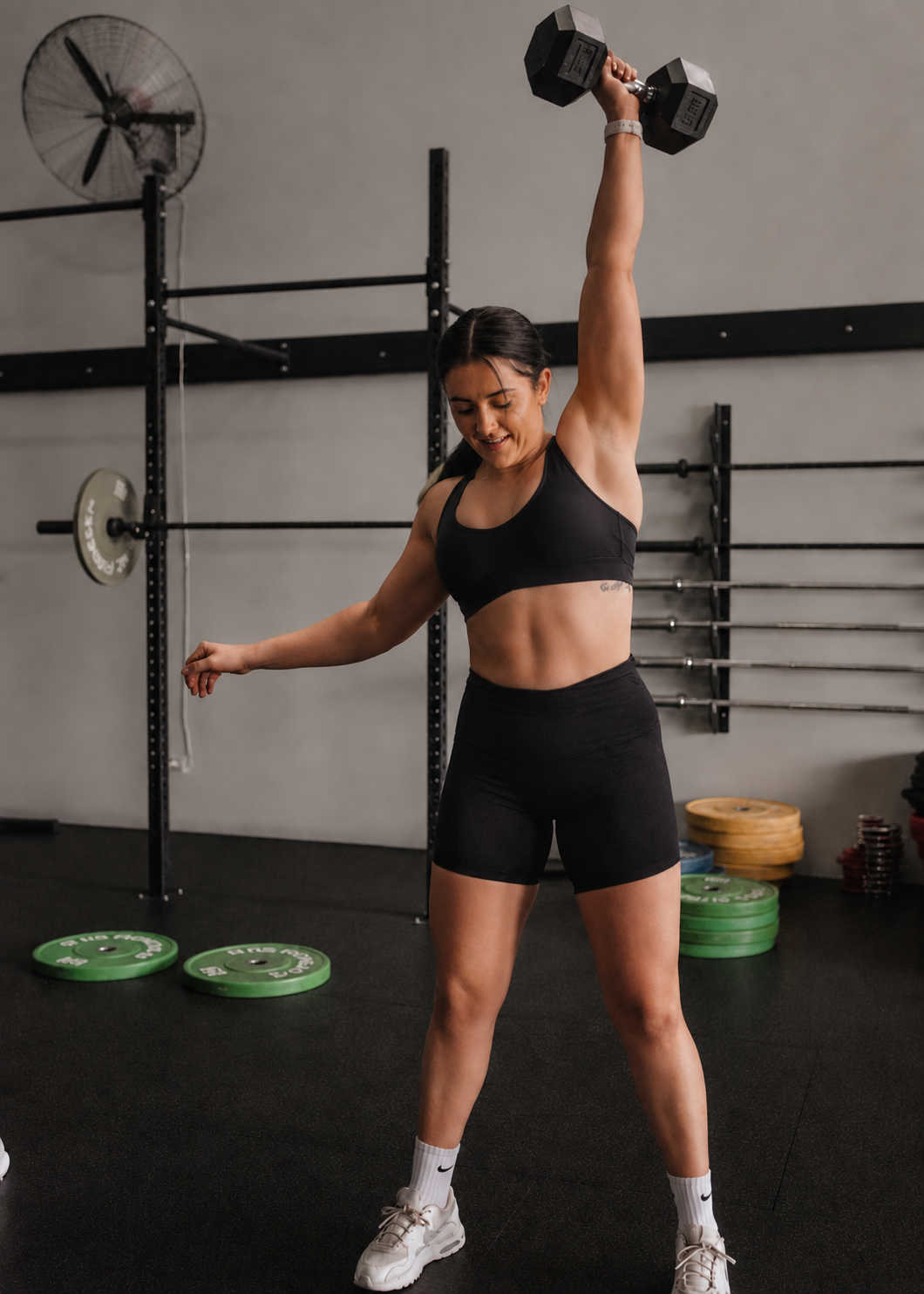
Dumbbells are the most versatile piece of strength training equipment available. They enable unilateral training, allow a greater range of motion on many movements, require less space than a barbell setup, and are accessible to a wider range of fitness levels and training goals. For many home gym users, dumbbells are the first purchase — and for good reason.
Unilateral Training
The defining advantage of dumbbells is that each arm or leg works independently. This forces each side to handle its own load, eliminating the compensation that bilateral barbell movements allow. Unilateral training identifies and corrects strength imbalances, develops stabiliser muscles more effectively, and reduces injury risk over the long term. Movements like single-arm rows, single-leg Romanian deadlifts, and alternating dumbbell presses are uniquely effective for balanced development.
Greater Range of Motion
On pressing movements in particular, dumbbells allow a greater range of motion than a barbell. Dumbbell bench press, for example, allows the hands to travel further apart at the bottom of the movement, increasing the stretch on the pectorals and recruiting more muscle fibre through a fuller range. This makes dumbbells particularly effective for chest, shoulder, and arm development.
Space Efficiency & Accessibility
A pair of dumbbells takes up minimal floor space and requires no rack, no spotter, and no barbell clearance. For small home gyms, apartments, or anyone training without a dedicated gym room, dumbbells are the most practical starting point. Adjustable dumbbells take this further — a single pair replaces an entire rack of fixed weights and can be stored in a fraction of the space.
Exercise Variety
The range of exercises possible with dumbbells is enormous. Lateral raises, rear delt flyes, bicep curls, tricep kickbacks, goblet squats, lunges, step-ups, farmer's carries, and dozens of other movements are either best performed with dumbbells or only possible with dumbbells. This variety makes dumbbells indispensable for accessory work and hypertrophy-focused training.
Lower Technical Barrier
Dumbbell movements are generally easier to learn than their barbell equivalents. The dumbbell squat, press, and row are more forgiving of technical imperfections than barbell versions, making them a better starting point for beginners or anyone returning to training after a break.
Limitations of Dumbbells
The primary limitation of dumbbells is loading capacity. Most home gym dumbbell sets top out at 40–50kg per hand — sufficient for most upper body work, but inadequate for heavy lower body training. A 100kg barbell squat is a realistic goal for many intermediate lifters; a 50kg dumbbell goblet squat is the practical ceiling for most home gym setups. For building maximum lower body and total body strength, dumbbells alone are not enough. Cost is also a factor: a full fixed dumbbell set from 5kg to 50kg represents a significant investment compared to a barbell and plate set covering the same total load range.
Head-to-Head: Key Movements Compared
Squats
Barbell wins. The barbell back squat and front squat allow far greater loading than any dumbbell variation and are the gold standard for lower body strength development. Goblet squats and dumbbell squats are excellent for beginners and as accessory movements, but they can't replicate the loading potential of a barbell squat for intermediate and advanced lifters.
Deadlifts
Barbell wins. The barbell deadlift is the most effective posterior chain exercise available. Dumbbell Romanian deadlifts and single-leg variations are valuable accessory movements, but the bilateral barbell deadlift is in a category of its own for total body strength development.
Bench Press
Both are excellent, for different reasons. The barbell bench press allows heavier loading and is the standard measure of upper body pressing strength. The dumbbell bench press allows greater range of motion and eliminates bilateral compensation. Ideally, use both: barbell for heavy pressing, dumbbells for volume and range of motion work.
Rows
Dumbbells win for unilateral work; barbells win for heavy bilateral loading. The single-arm dumbbell row is one of the best back exercises available, allowing heavy loading with full range of motion and no bilateral compensation. The barbell row is superior for total load and posterior chain recruitment. Again, both have a place in a complete program.
Overhead Press
Both are valuable. The barbell overhead press is the primary measure of overhead strength and allows heavier loading. Dumbbell overhead press develops shoulder stability and allows independent arm movement. Alternating between both produces the best results.
Accessory & Isolation Work
Dumbbells win decisively. Lateral raises, rear delt flyes, bicep curls, tricep extensions, and most isolation movements are best performed with dumbbells. The barbell has limited application for accessory work.
Which Should You Buy First?
If you can only buy one to start, the answer depends on your primary training goal:
Buy a barbell first if: your primary goal is maximum strength development, you plan to squat and deadlift heavy, you have space for a rack, and you're comfortable with barbell technique or willing to learn it. A quality Olympic barbell, a set of bumper plates, and a power rack or squat stand is the most effective strength training setup available at any price point.
Buy dumbbells first if: you're training in a small space without room for a rack, you're a beginner building foundational movement patterns, your training is focused on hypertrophy and body composition rather than maximum strength, or you want maximum exercise variety with minimal equipment. Our rubber hex dumbbells and dumbbell packages are the most popular starting point for home gym builders.
The best answer for most people: buy both, in sequence. Start with a barbell and rack for your compound movements, then add dumbbells for accessory work and unilateral training. This combination covers virtually every strength training need and represents the most complete home gym setup for the investment.
Building the Complete Setup
A complete home gym strength setup typically includes:
- A power rack or squat stand as the foundation
- A quality Olympic barbell and bumper plate set — or a bar and plate package for convenience
- Fractional change plates for precise progressive overload
- A adjustable weightlifting bench for pressing movements
- A set of rubber hex dumbbells or a dumbbell package for accessory work
- A dumbbell storage rack to keep the space organised
- Quality rubber gym flooring to protect your subfloor and equipment
If you'd like help designing a setup that fits your space, goals, and budget, our team offers free onsite consultations and 3D floor plans across Melbourne and regional Victoria. We'll help you get the right equipment in the right configuration — and handle delivery and installation so you can focus on training.
Book a Free Home Gym Consultation →
Visit our Melbourne showroom or book an onsite consultation. Afterpay & BNPL available at checkout.