


Gym Flooring Guide 2026: How to Choose the Right Flooring for Your Home or Commercial Gym
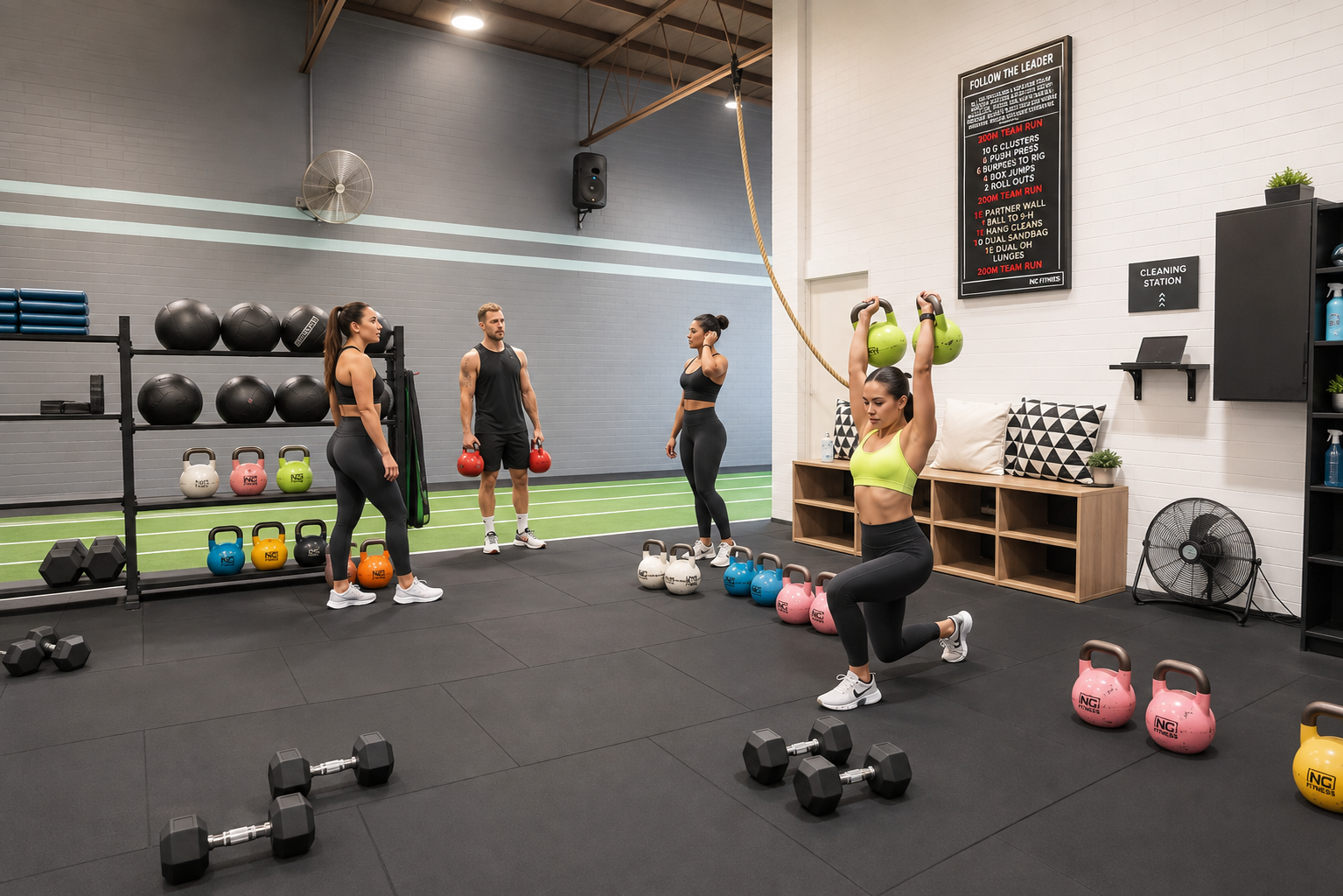
Gym flooring is the single most important — and most frequently underestimated — element of any gym fit-out. It's the first thing you install and the last thing you want to replace. Get it right and it protects your subfloor, reduces noise, provides grip and stability, and gives your space a professional finish that lasts for years. Get it wrong and you're dealing with cracked concrete, sliding equipment, noise complaints, and flooring that deteriorates under load within months.
At NC Fitness, we supply and professionally install gym flooring for home gyms, garage gyms, boutique studios, school facilities, and commercial gyms across Melbourne and regional Victoria. This guide covers everything you need to know to make the right choice for your space.
Why Gym Flooring Matters More Than You Think
Most people building a home gym focus their budget on equipment and treat flooring as an afterthought. This is one of the most common — and costly — mistakes in gym setup. Here's what quality gym flooring actually does:
Protects your subfloor. A dropped barbell or heavy dumbbell on bare concrete will crack or chip the surface over time. On timber floors, the damage is even faster. Quality rubber flooring absorbs impact and distributes load, keeping your subfloor intact.
Reduces noise and vibration. Rubber flooring significantly attenuates the sound of dropped weights and equipment movement — critical for garage gyms near living areas, apartments, or gyms adjacent to classrooms in school environments.
Provides grip and stability. Equipment that slides or rocks under load is both ineffective and dangerous. Rubber flooring keeps racks, benches, and cardio equipment firmly in place, and provides a non-slip surface underfoot during dynamic movements.
Protects your joints. Training on hard concrete or timber for extended periods increases joint stress. Rubber flooring provides a degree of cushioning that reduces fatigue and long-term wear on knees, hips, and ankles.
Defines your space. Quality flooring transforms a garage or spare room into a gym. It's the visual foundation of the entire space, and colour-coded zones add a professional, purposeful aesthetic.
Types of Gym Flooring: What's Available
Rubber Gym Tiles
Rubber gym tiles are the industry standard for home and commercial gym flooring. Made from vulcanised rubber — either virgin rubber or recycled rubber with a virgin rubber top layer — they offer the best combination of durability, impact absorption, noise reduction, and ease of installation. Tiles interlock or butt-join and can be laid without adhesive in most home gym applications, making them easy to reconfigure or expand as your gym grows.
Our rubber gym tiles are available in multiple thicknesses and are suitable for everything from light cardio zones to heavy strength training areas. They're the most versatile flooring option for home gyms and the most common choice across our Melbourne and Victoria fit-outs.
Jigsaw / Interlocking Mats
Jigsaw mats use a puzzle-edge interlocking system that creates a seamless, stable surface without adhesive. They're particularly popular for garage gyms because they're easy to self-install, can be taken up and relaid if you move, and are available in thicker profiles that suit Olympic lifting and heavy deadlift zones.
Our 30mm jigsaw mats are the go-to choice for home gym users who want a thick, impact-absorbing surface that's straightforward to install without professional help. At 30mm, they provide excellent protection for both your subfloor and your equipment under heavy drops.
Turf
Synthetic turf is a premium addition to gyms that include sled work, sprint lanes, or functional training zones. It provides a low-friction surface for sled pushes and pulls, a high-friction surface for sprinting and agility work, and a visually striking aesthetic that sets a gym apart. Turf is typically installed in dedicated lanes alongside rubber flooring in the strength and cardio zones.
Browse our gym turf range for options suitable for home and commercial installations. Our team can advise on turf selection and handle professional installation across Melbourne and Victoria.
Choosing the Right Thickness
Thickness is the most important specification decision when selecting gym flooring. Too thin and you lose impact protection; too thick and you create an unstable surface for certain movements. Here's the practical guide:
15mm — Light Use Zones
15mm rubber is appropriate for cardio equipment zones, stretching and mobility areas, and light functional training. It provides basic subfloor protection and noise reduction but is not suitable for areas where weights will be dropped or heavy equipment will be loaded. It's a cost-effective option for covering large areas where heavy strength training won't occur.
20mm — General Strength Training
20mm is the most common thickness for home gym strength zones. It handles the load of power racks, benches, and cable machines, provides good impact absorption for controlled weight lowering, and offers a stable surface for all standard strength training movements. For most home gyms, 20mm rubber tiles across the primary training area is the right specification.
30mm — Olympic Lifting & Heavy Deadlifts
30mm is the specification for any zone where weights will be dropped from height — Olympic lifting platforms, deadlift areas, and CrossFit-style training zones. The additional thickness absorbs the impact of dropped barbells, protects the subfloor from repeated heavy loading, and significantly reduces noise transmission. Our 30mm jigsaw mats are the most popular choice for this application in home gym environments.
Mixed Thickness Zoning
Many well-designed home gyms use a combination of thicknesses — 30mm under the rack and deadlift area, 20mm across the general strength zone, and 15mm in the cardio and stretching areas. This approach optimises both performance and cost, putting the most protection where it's needed most. Our team can help you plan a zoned flooring layout during an onsite consultation.
Flooring for Different Gym Types
Garage Gyms
Garage gyms present specific challenges: concrete subfloors that can be uneven or damp, temperature swings between summer and winter, and limited space that needs to be used efficiently. For garage gyms, floating rubber tile or jigsaw mat installations — without adhesive — are the preferred approach. They accommodate minor subfloor imperfections, allow for thermal expansion and contraction, and can be taken up if you need to use the garage for other purposes. Our rubber gym tiles and 30mm jigsaw mats are both well-suited to garage installations across Melbourne's variable climate.
Home Gym Rooms (Spare Room / Basement)
Indoor home gym rooms typically have timber or concrete subfloors and benefit from rubber flooring primarily for equipment protection and noise reduction rather than temperature resilience. In these environments, a clean butt-join rubber tile installation — potentially with adhesive for a permanent finish — creates a professional result. Acoustic underlay beneath the rubber tiles is worth considering if the gym is above a living area or bedroom.
Boutique Studios & Commercial Gyms
Commercial environments require flooring that withstands high traffic, repeated heavy loading, and daily cleaning. Commercial-grade rubber tiles with a virgin rubber top layer are the specification for these environments. Colour zoning, custom cuts around fixed obstacles, and seamless professional installation are all standard for commercial fit-outs. Our installation team handles commercial flooring projects across Melbourne metro and regional Victoria — enquire about our commercial fit-out service for a project quote.
School & Institutional Gyms
School gym flooring must meet slip-resistance standards (AS 4586), withstand high-volume daily use across multiple user groups, and provide acoustic attenuation where the gym is adjacent to classrooms. Commercial-grade rubber tiles with acoustic underlay are the standard specification. Professional installation with precise cutting around fixed obstacles is essential for a compliant, long-lasting result.
Installation: DIY vs. Professional
DIY Installation
For straightforward rectangular spaces without fixed obstacles, DIY rubber tile or jigsaw mat installation is achievable for most home gym builders. Jigsaw mats in particular are designed for self-installation — they interlock without tools and can be laid in a few hours. Rubber tiles in a butt-join configuration are similarly manageable for simple layouts. The key requirements are a clean, level subfloor and accurate measurements before ordering.
Professional Installation
For irregular spaces, rooms with fixed obstacles (columns, drains, built-in cabinetry), commercial environments, or any installation requiring adhesive bonding, professional installation is strongly recommended. Our installation team handles subfloor preparation, precise cutting, adhesive application where required, and finishing — delivering a result that looks and performs like a commercial gym. We service all Melbourne metro suburbs and regional Victoria including Geelong, Ballarat, Bendigo, and the Mornington Peninsula.
To discuss professional flooring installation for your project, book an onsite consultation and we'll provide a full quote including supply and installation.
Flooring Maintenance: Keeping It in Top Condition
Quality rubber gym flooring is low-maintenance by design, but a basic care routine extends its life and keeps it looking professional.
Daily: Sweep or vacuum to remove chalk, dust, and debris. Rubber flooring attracts fine particles that can act as an abrasive if left to accumulate.
Weekly: Mop with a mild detergent solution — avoid harsh solvents or bleach-based cleaners, which can degrade the rubber surface over time. A pH-neutral floor cleaner is ideal.
Monthly: Inspect tile edges and joins for lifting or separation, particularly in floating installations. Re-seat any tiles that have shifted and check that equipment legs haven't created indentations in thinner tiles.
Annually: For commercial environments, a professional deep clean and inspection is recommended. Check for any tiles that have degraded under heavy point loading and replace as needed.
Common Gym Flooring Mistakes to Avoid
Choosing foam tiles. Foam tiles compress permanently under heavy equipment, slide under dynamic loading, and deteriorate quickly. They are not appropriate for any strength training environment. Always specify rubber.
Going too thin. 10mm or 12mm rubber is insufficient for any zone where weights will be dropped or heavy racks will be loaded. Start at 20mm for strength zones and 30mm for lifting platforms.
Skipping subfloor preparation. Rubber flooring laid over an uneven or damp subfloor will shift, lift at the edges, and wear unevenly. A clean, level, dry subfloor is the prerequisite for a quality installation.
Underestimating the area. Always add 5–10% to your measured area when ordering tiles to account for cuts and waste. Running short mid-installation and waiting for a second delivery is a common and avoidable frustration.
Ignoring acoustic requirements. If your gym is above a living area or adjacent to bedrooms or classrooms, acoustic underlay beneath the rubber tiles is not optional — it's the difference between a functional gym and a noise complaint.
Ready to Floor Your Gym?
Whether you're laying a simple garage gym floor yourself or fitting out a commercial facility with professional installation, NC Fitness has the flooring, the expertise, and the local team to get it right. Browse our full flooring range below, or book a consultation and let us design the perfect flooring solution for your space.
- Rubber Gym Tiles — versatile, durable, available in multiple thicknesses
- 30mm Jigsaw Mats — ideal for garage gyms and Olympic lifting zones
- Gym Turf — for sled lanes and functional training zones
Book a Free Flooring Consultation →
Supply and professional installation available across Melbourne metro and regional Victoria.